


Hearing your toddler’s first words is one of parenting’s most exciting milestones. When those words come later than expected, or speech seems to lag behind other children the same age, worry naturally follows. Is this normal variation in development, or could it signal a speech delay requiring professional help?
Speech and language development varies widely among toddlers. Some children speak in sentences before their second birthday, whilst others are still learning single words. This normal variation makes determining when to seek help challenging. However, recognising typical speech milestones and understanding warning signs helps you identify when your child might benefit from evaluation and support.
This guide explains normal speech development patterns, identifies signs of possible delays, explores common causes, and helps you decide when to consult a speech-language pathologist. Early identification and intervention make significant differences in helping children develop strong communication skills, so understanding these milestones benefits every parent.
Understanding Normal Speech Development
Children develop speech and language skills at their own pace, but general milestones help you track whether development is progressing typically.
Speech vs Language: The Difference
Before discussing milestones, understanding the difference between speech and language helps clarify concerns.
Speech refers to the actual sounds your child makes – how clearly they pronounce words and form sounds. Speech involves physical coordination of mouth, tongue, and vocal cords.
Language involves understanding and using words to communicate. This includes vocabulary (words your child knows), grammar (how words are put together), and comprehension (understanding what others say).
A child can have speech delays (difficulty making sounds clearly) without language delays (understanding and using many words), or vice versa. Both are important for communication development.
Typical Speech Milestones by Age
These are general guidelines. Remember that some variation is normal, and bilingual children may reach certain milestones differently.
12 Months (1 Year)
- Says first words like “mama” or “dada” meaningfully
- Uses simple gestures like waving bye-bye or shaking head for “no”
- Responds to their name
- Understands simple commands like “come here”
- Babbles with varied sounds
- Points to objects or people
18 Months (1.5 Years)
- Says 10-20 simple words
- Points to familiar objects when named
- Follows simple directions without gestures
- Imitates words heard in conversation
- Uses words to request things
- Shakes head “no” and may nod “yes”
24 Months (2 Years)
- Uses 50 or more words
- Combines two words (“more juice,” “daddy go”)
- Uses simple pronouns (me, you, mine)
- Names familiar objects and pictures
- Follows two-step directions (“Get your shoes and bring them here”)
- Speech is understood by parents about 50% of the time
30 Months (2.5 Years)
- Uses 200-300 words
- Combines 3-4 words in phrases
- Asks simple questions (“Where daddy?”)
- Uses action words (run, eat, play)
- Strangers understand speech about 50-75% of the time
- Follows two-step unrelated commands
36 Months (3 Years)
- Uses 500-1000 words
- Speaks in 3-5 word sentences
- Asks many questions (who, what, where)
- Tells simple stories
- Speech is understood by strangers about 75% of the time
- Uses basic grammar correctly most of the time
Individual Variation
Children develop at different rates. Some perfectly healthy toddlers speak later than these milestones suggest. Factors affecting timing include:
- Temperament (quiet children may talk less but understand everything)
- Birth order (later-born children sometimes speak later)
- Bilingual environment (may take slightly longer initially but catch up)
- Gender (girls often speak slightly earlier than boys on average)
- Individual learning style
Missing one or two milestones by a few months doesn’t necessarily indicate problems, especially if your child is progressing in other developmental areas and understands language well.
Signs of Possible Speech Delays
Whilst variation is normal, certain signs warrant professional evaluation. Watch for these red flags at different ages.
Concerning Signs at 12 Months
- No babbling or limited vocal sounds
- Doesn’t respond to their name
- No gestures like pointing or waving
- Doesn’t make eye contact
- Lost words or sounds they previously used
Concerning Signs at 18 Months
- Says fewer than 10 words
- Doesn’t point to show you things
- No attempts to imitate words
- Doesn’t understand simple commands
- Prefers gestures over vocalizations to communicate
- Doesn’t seem interested in communicating
Concerning Signs at 24 Months
- Says fewer than 50 words
- Doesn’t combine two words together
- Frequently frustrated when trying to communicate
- Doesn’t follow simple two-step directions
- Doesn’t imitate actions or words
- Only repeats what others say (echolalia)
Concerning Signs at 30-36 Months
- Vocabulary isn’t growing
- Speech is very difficult for parents to understand
- Doesn’t ask questions
- Doesn’t use simple sentences
- Shows frustration when not understood
- Family members regularly “translate” for the child
Red Flags at Any Age
Consult a professional immediately if your toddler:
- Loses speech or language skills they previously had
- Doesn’t respond to sounds or their name
- Shows no interest in communicating with others
- Has persistent drooling or difficulty eating
- Displays unusual tongue movements or mouth positioning
- Has a hoarse or nasal-sounding voice consistently
Common Causes of Speech Delays
Understanding why speech delays occur helps address them effectively. Multiple factors can contribute to delayed speech development.
Hearing Problems
Hearing is essential for learning speech. Children learn to talk by hearing language around them. Even mild or temporary hearing loss from frequent ear infections can delay speech development. If a child can’t hear sounds clearly, they can’t reproduce them accurately.
Signs your child may have hearing difficulties:
- Doesn’t respond when called from behind
- Turns up television or device volume very high
- Watches faces intently when people speak
- Doesn’t startle at loud noises
- Speech isn’t progressing despite other development being normal
Oral-Motor Problems
Speech requires coordinated movement of lips, tongue, and jaw. Some children have difficulty controlling these muscles for speech, even though they may eat and swallow normally.
Conditions affecting oral-motor function include:
- Apraxia of speech (difficulty planning and coordinating mouth movements)
- Dysarthria (weakness in speech muscles)
- Tongue-tie (tight tissue under tongue restricting movement)
Developmental Disorders
Speech delays sometimes occur alongside broader developmental concerns:
Autism spectrum disorder: May affect both speech development and social communication. Children might not use speech for social interaction even if they can say words.
Intellectual disability: Can cause delays in multiple developmental areas including speech and language.
Global developmental delay: When a child is significantly delayed across several developmental domains.
Limited Language Exposure
Children learn language through interaction and exposure. Limited conversation, excessive screen time instead of interaction, or lack of language-rich environment can slow speech development.
This doesn’t mean talking constantly – quality matters more than quantity. Reading books, singing songs, having conversations, and responding to your child’s communications all build language skills.
Bilingual or Multilingual Environment
Growing up with multiple languages is not a cause of speech delay. Bilingual children may initially have smaller vocabularies in each individual language but typically have age-appropriate total vocabulary across both languages combined. They also develop appropriate language skills overall.
However, if a bilingual child shows significant delays in both languages, evaluation is still warranted.
Prematurity or Medical Conditions
Children born prematurely may reach milestones later, including speech. Other medical conditions affecting development include:
- Cerebral palsy
- Genetic syndromes
- Brain injuries
- Neurological conditions
Family History
Speech and language delays sometimes run in families. If parents or siblings had speech delays, a child may be at increased risk.
When to Seek Professional Help
Trust your instincts as a parent. If you’re concerned about your toddler’s speech development, seeking evaluation is always appropriate. Early assessment either provides reassurance or identifies problems when intervention is most effective.
Specific Times to Consult a Professional
Seek evaluation if your child:
- Isn’t meeting age-appropriate speech milestones by several months
- Shows any red flags mentioned earlier
- Has difficulty being understood by family members
- Becomes frustrated when trying to communicate
- Stopped using words they previously said
- Has persistent ear infections affecting hearing
- Shows other developmental delays alongside speech concerns
- Had complications at birth or medical conditions
Don’t Wait and See
Many parents are told “don’t worry, they’ll catch up” or “boys talk later.” Whilst some children do catch up on their own, others benefit significantly from early intervention. Waiting rarely helps and may cause your child to fall further behind.
Early speech therapy is most effective. The brain is highly receptive to learning during early childhood. Addressing speech delays before age three typically produces better, faster results than waiting until preschool or school age.
Who to Consult
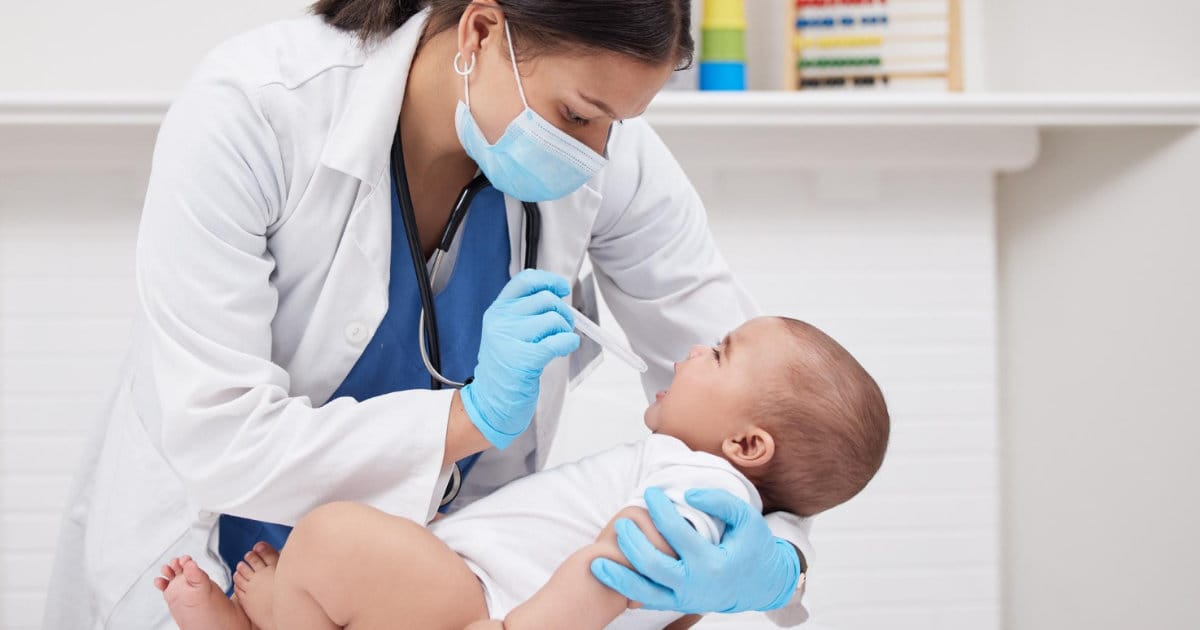
Start with your paediatrician who can perform initial screening, check hearing, rule out medical causes, and provide referrals to specialists if needed.
Speech-language pathologist (SLP) is the specialist who evaluates and treats speech and language disorders. They conduct comprehensive assessments and create therapy plans tailored to your child’s needs.
Audiologist tests hearing to rule out or identify hearing problems contributing to speech delays.
What Happens During a Speech Evaluation
Understanding the evaluation process reduces anxiety and helps you prepare.
Initial Consultation
The speech-language pathologist will ask detailed questions about:
- Your concerns about your child’s speech
- Developmental history and milestones
- Medical history including hearing and ear infections
- Family history of speech or language problems
- How your child communicates at home
- Languages spoken in your home
Observation and Assessment
The SLP observes your child’s communication skills through:
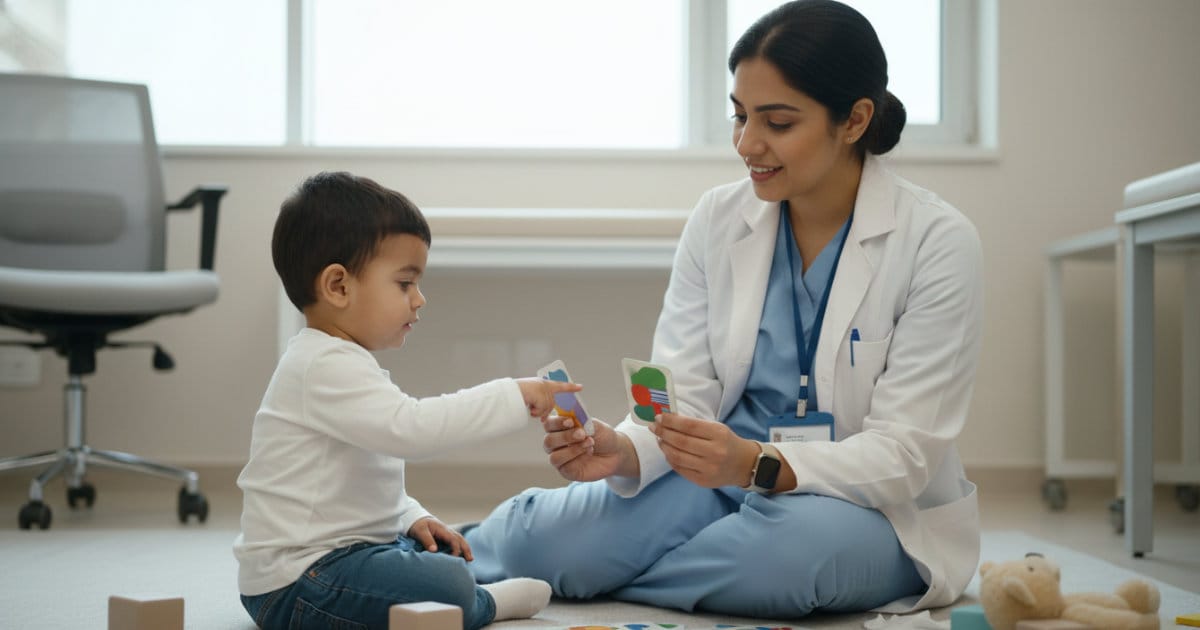
- Play-based activities (watching how your child interacts and communicates)
- Standardised tests appropriate for your child’s age
- Assessing speech sound production
- Evaluating vocabulary and language comprehension
- Observing oral-motor skills
- Checking how your child uses gestures and non-verbal communication
Evaluations are typically play-based and non-threatening for young children. The SLP makes assessment feel like games and activities.
Results and Recommendations
After evaluation, the SLP will:
- Explain findings in clear language
- Identify areas of strength and concern
- Recommend whether therapy is needed
- Suggest frequency and type of therapy if appropriate
- Provide strategies for encouraging speech at home
- Answer your questions about your child’s development
Speech Therapy for Toddlers
If therapy is recommended, understanding what it involves helps you support your child’s progress.
What Speech Therapy Looks Like
Toddler speech therapy is play-based and engaging. The SLP uses:
- Toys and games your child enjoys
- Books and pictures
- Songs and movement activities
- Natural, fun interactions
- Repetition in varied contexts
- Positive reinforcement and encouragement
Sessions focus on building communication skills through activities that feel like play to your child.
Therapy Goals
Depending on your child’s specific needs, goals might include:
- Increasing vocabulary
- Improving speech sound production
- Building sentence length and complexity
- Enhancing language comprehension
- Developing social communication skills
- Strengthening oral-motor coordination
Parent Involvement
Your involvement is crucial to success. The SLP will teach you techniques to practice at home between sessions. Consistent practice in daily routines makes the biggest difference in progress.
Progress Timeline
Every child responds differently to therapy. Some show rapid improvement whilst others progress more gradually. Regular reassessment tracks progress and adjusts treatment plans as needed.
Most children need therapy for several months to a year or more, depending on the severity of delay and individual response to treatment.
Supporting Speech Development at Home
Whether your child is in therapy or you’re working on prevention, these strategies encourage language development.
Talk, Talk, Talk
Narrate daily activities: “Now we’re putting on your shoes. Blue shoes! Let’s go outside.” This models language and builds vocabulary naturally.
Read Together Daily
Reading books exposes children to varied vocabulary, grammar structures, and storytelling. Point to pictures, ask questions, and let your child turn pages and interact with books.
Respond to Communication Attempts
When your child points, vocalizes, or uses gestures, respond enthusiastically. This reinforces that communication works and encourages more attempts.
Expand on What They Say
If your child says “car,” respond with “Yes, big red car!” This models slightly more complex language without correcting them.
Sing Songs and Nursery Rhymes
Music and rhythm support language learning. Repetitive songs with gestures are particularly beneficial.
Reduce Screen Time
Face-to-face interaction is essential for language development. Screens don’t provide the back-and-forth communication children need to learn speech.
Give Time to Respond
After asking a question or making a comment, pause and wait. Give your child time to process and respond without rushing.
Play Together
Interactive play provides natural opportunities for communication. Follow your child’s lead and join their play rather than directing it.
Avoid Pressure
Don’t constantly demand “say this” or correct speech errors harshly. This can make children reluctant to communicate. Model correct speech naturally instead.
Limit Pacifier and Bottle Use
Prolonged pacifier or bottle use beyond age two can affect speech development. Discuss appropriate weaning with your paediatrician.
Bilingual Families: Special Considerations
Raising a bilingual child doesn’t cause speech delays, but parents often have specific questions.
Maintaining Both Languages
Continue speaking both languages at home. Bilingualism is an asset, and children can successfully learn multiple languages simultaneously.
Code-Switching Is Normal
Mixing languages in one sentence is normal for bilingual toddlers and doesn’t indicate confusion. They’re learning the rules of both languages.
When to Worry
Seek evaluation if your bilingual child:
- Shows significant delays in both languages
- Isn’t progressing in either language
- Has trouble understanding in both languages
- Shows other developmental concerns
Finding Appropriate Support
When seeking speech therapy for a bilingual child, ideally find an SLP familiar with bilingual development or who speaks your home language. They can assess your child in both languages to get a complete picture.
Common Questions Parents Ask
“My Child Understands Everything. Is Speech Delay Still a Problem?”
Good comprehension is a positive sign. However, if speech production is significantly delayed, evaluation is still recommended. Understanding language and producing speech involve different skills.
“Will My Child Need Speech Therapy Forever?”
Most children who receive early intervention for speech delays eventually catch up to peers and don’t need ongoing therapy. Duration depends on the cause and severity of delay.
“Can’t We Just Wait Until Preschool?”
Earlier intervention produces better outcomes. The window for easiest language learning closes gradually after age three. Don’t miss this optimal time for treatment.
“Could It Be Laziness or Stubbornness?”
Children don’t choose to delay their speech. If a child could speak normally, they would. Speech delays always have underlying causes worth investigating.
“My Older Child Talks for Them. Could That Be Why?”
Having siblings who interpret can reduce a child’s need to communicate verbally. However, this alone rarely causes significant delays. If concerned, still seek evaluation.
Taking Action for Your Child
Speech delays are among the most common developmental concerns in toddlers, and help is readily available. If you’re worried about your child’s speech development, don’t wait. Early evaluation provides answers – either reassuring you that development is progressing normally despite individual variation, or identifying concerns when intervention is most effective.
Remember that every child develops at their own pace, but missing multiple milestones or showing red flags warrants professional assessment. Your instincts as a parent matter. If something feels off, trust that feeling and seek evaluation.
Speech therapy for young children is play-based, effective, and can make tremendous differences in helping children develop strong communication skills. The earlier intervention begins, the better the outcomes typically are. Don’t let concerns about “overreacting” or advice to “wait and see” prevent you from getting your child the assessment and support they may need.
At Shifa Al Jazeera Hospital, our speech-language pathologists and paediatricians work together to evaluate and support children with speech and language delays. We provide comprehensive assessments in multiple languages and create treatment plans tailored to each child’s unique needs and family circumstances.